Things to Do in Malabo in March
March weather, activities, events & insider tips
Low Season · Budget Friendly
March Weather in Malabo
Long-run averages for March
88°F (31°C)
High Temp
75°F (24°C)
Low Temp
4.0 inches (102 mm)
Rainfall
82%
Humidity
12
Sunny-Day UV
⚠ Malaria transmission on Bioko Island remains high year-round and March is no exception. Prophylaxis, treated bed nets, and DEET-based repellent are non-negotiable medical precautions, not optional extras. Consult a travel medicine specialist at least six weeks before departure to start the appropriate regimen on schedule.
⚠ Afternoon thunderstorms in late March can develop rapidly with intense lightning, in the highlands around Pico Basilé above 2,000 m (6,560 ft). Avoid exposed ridgelines and summit areas after midday when cloud buildup accelerates and the risk of being caught in an electrical storm on open ground becomes real.
⚠ UV exposure at equatorial latitude is severe even on overcast days when cloud cover creates a false sense of protection. Sunburn and heat exhaustion are genuine risks for travelers spending extended time outdoors, on water or at elevation where reflected UV and thinner atmosphere compound direct exposure.
Is March Right for You?
Weigh the advantages and considerations before booking
Advantages
- + March sits at the tail end of the drier season. You get 4.0 inches (102 mm) of rain, not the 10.3 inches (262 mm) that June dumps on Bioko Island. Mornings stay clear enough for highland treks and coastal excursions. Wet season brings cancellations. March does not.
- + Semana Santa hits Malabo hard. The Cathedral of Santa Isabel and the colonial streets around Plaza de la Independencia fill with candlelit processions, incense-heavy masses, and communal gatherings. The city's Catholic character shows nowhere else like this. No other month comes close.
- + Malabo never draws crowds. March is quiet. It falls outside African Union summit cycles and conference events that occasionally fill Sipopo's hotels. Arena Blanca's volcanic sand waits empty. The Moka Highlands trails too. Yours alone.
- + Transitional weather brings Bioko's forests to peak photogenic condition. Lush and green from early rains. Yet dry enough that trails through the Gran Caldera de Luba stay passable. By June, thigh-deep mud makes them impossible. March is the window.
Considerations
- − Humidity hits 82%. Midday feels like breathing through warm, wet cloth. Walk from Mercado Central toward the waterfront and your shirt soaks through. Structure your days around shade. Around functioning air conditioning. Plan accordingly.
- − March ramps toward wet season. Total rainfall stays moderate. But afternoon storms hit fast and hard. Unpaved roads outside the city center turn to orange-red laterite mud slicks. Travel stalls for an hour or two. Pack patience.
- − Tourism infrastructure stays limited by any international standard. Flights run through Douala or Addis Ababa with infrequent scheduling. Organized tours for independent travelers remain sparse. Outside Sipopo and a few central spots, amenities vary. Electricity still depends on generators more than grid in parts of the city.
Best Activities in March
Top things to do during your visit
Pico Basilé Volcano Highland Trek
Pico Basilé rises 3,012 m (9,882 ft) above Bioko Island's northern tip. Clear March mornings reveal three distinct worlds on the ascent. Humid lowland forest rings with grey parrot screech and rotting fruit smell. Montane cloud belt follows, moss draping every branch, temperature dropping from 31°C (88°F) at sea level. Windswept grasslands crown the summit. On lucky days, you see across the Gulf of Guinea to Cameroon's coastline, down to Malabo's red rooftops and rusting port cranes below. March mornings offer the clearest windows. Clouds build by early afternoon. Pre-dawn departures repay lost sleep. The altitude gain is serious. The final stretch cools enough to need a fleece. Arrange transport and local guides through licensed operators who know military checkpoint protocols on the summit road. Bring more water than you think. No facilities exist on the mountain.
Booking Tip: Book guided treks two weeks ahead. Use operators experienced with Pico Basilé permits and checkpoint procedures. The summit road needs a vehicle for the lower portion, then foot travel beyond. Guides who know checkpoint protocols and weather patterns are essential. Not optional.
Gran Caldera de Luba and Moka Highlands Wildlife Expedition
Bioko's southern highlands hold one of Central Africa's most intact rainforests. The Gran Caldera de Luba Scientific Reserve anchors it. March's transitional weather brings peak green canopy after early rains. Trails stay muddy in patches, not yet the streams they become by peak wet season. Bioko's drill populations, among Africa's most endangered primates, forage here in family groups. You hear them crashing through undergrowth before you see them. Endemic birds, including the Fernando Po speirops, call most at dawn when forest drips with condensation and light barely pierces the canopy. The trek from Moka Valley toward the caldera floor demands a full day. Roughly 15 km (9.3 miles) of steep, root-tangled trail. Air so thick with moisture fogs your camera lens the instant you pull it from your bag. March offers your best shot at completing the loop without sustained rain forcing retreat. Expect to get wet anyway.
Booking Tip: This demands a full day or multi-day expedition. You need a knowledgeable local guide and advance permits from reserve authorities. Book through conservation-focused operators at least three weeks ahead. Logistics involve transport to the Moka area and coordination with reserve management. Group sizes are typically capped.
Malabo Colonial Quarter and Cathedral Walking Circuit
Malabo's old quarter still carries the bones of Spanish colonial architecture. A morning walk through the streets between the Cathedral of Santa Isabel and Plaza de la Independencia reveals a city layered in contradictions. The cathedral itself, with its twin neo-Gothic spires and cool stone interior, smells of candle wax and aged wood. It sits less than 200 m (650 ft) from government buildings whose modernist concrete facades were funded by oil revenues that reshaped the skyline starting in the early 2000s. Walk the grid of streets south of the plaza before the heat sets in. You'll pass faded colonial houses with wrought-iron balconies and louvered shutters, some carefully maintained and others crumbling back into the tropical vegetation that pushes through every crack in the masonry. The port area, where painted fishing pirogues rest on dark volcanic sand beside container ships, smells of diesel and salt and drying fish. In March, the morning light before 9 AM hits the cathedral's pale facade at an angle that rewards patient photographers. The humidity hasn't yet built to the point where the air hazes over. If Semana Santa falls during your visit, the processions through these same streets add layers of copal incense smoke, chanting, and candlelight that the quarter was quite built around.
Booking Tip: Self-guided walks work well since the colonial core is compact, roughly 1 km (0.6 miles) square. For historical context and access to buildings not open to casual visitors, arrange a local cultural guide through your accommodation or licensed operators. Start before 8 AM to beat the worst of the heat.
Arena Blanca and Southern Bioko Coastal Day Trip
The drive south from Malabo toward Luba, Bioko's second town, follows a road that alternates between paved stretches and bone-jarring laterite. The coastline it traces earns every rattle in your spine. Arena Blanca sits in a cove where the island's characteristic dark volcanic sand gives way to a lighter patch that earned its name. In March the water is warm enough at roughly 27°C (81°F) to wade straight in without hesitation. The Gulf of Guinea tends to run calmer in March than during the peak wet-season swells. Boat excursions along the coast toward Luba are more reliable than they'll be a few months later. South of Luba the road deteriorates but the landscape opens into volcanic cliffs dropping straight into white surf, with seabirds wheeling against a backdrop of green so dense it looks painted on. Pack food and water. Facilities outside Malabo and Luba are effectively nonexistent. Don't expect lifeguards, changing rooms, or any infrastructure at the beaches themselves. The reward is solitude and a coastline where the loudest sound is the crash of waves against basalt and the chatter of weaver birds in the palms above the tideline.
Booking Tip: Arrange a vehicle with a driver through your accommodation or a licensed transport operator at least a week ahead. The southern road requires a sturdy vehicle, ideally with four-wheel drive for sections beyond Luba. A full day is the minimum for a worthwhile trip.
Mercado Central Food and Local Life Immersion
Malabo's Mercado Central is the sensory core of the city. It's a covered market where the smell of smoked fish and dried chili pepper hits you from half a block away. The sound is a wall of haggling in Spanish, Bubi, and Fang layered over the thump of machetes splitting green plantains on wooden chopping blocks. March's slightly cooler mornings, with temperatures starting around 24°C (75°F) before the equatorial sun climbs, are the best window to go. The heat trapped under the tin roof builds fast after mid-morning. The fish stalls nearest the entrance display the morning catch laid out on banana leaves, silvery and still glistening. Deeper inside the produce sellers stack yuca, malanga, and the small fiery chilies that form the base of the pepper sauces central to Equatoguinean cooking. The prepared food section, usually toward the back, serves plates of grilled plantain alongside pepper soup and smoked fish that carry a smoky, slow-building heat unlike anything you've encountered if you haven't eaten in Central Africa before. Palm wine, called topé locally, is sold in recycled bottles and tastes mildly sour and yeasty when fresh in the morning. It turns sharper and more potent by afternoon as it ferments in the heat. Go early. Go hungry. Point at whatever the person next to you is eating.
Booking Tip: No advance booking needed. The market is open daily and busiest in the morning. Going with a local guide or Malabo-based cultural operator adds context and helps navigate the layout and language barrier, if your Spanish is limited.
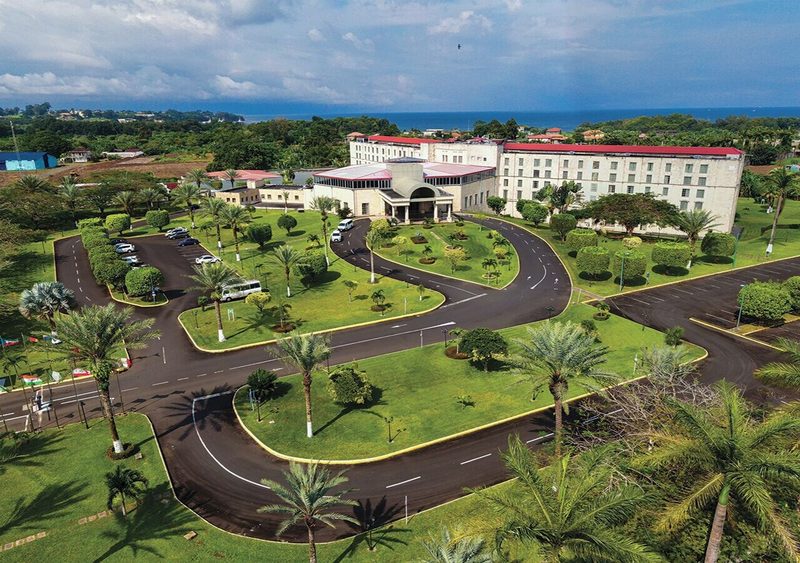
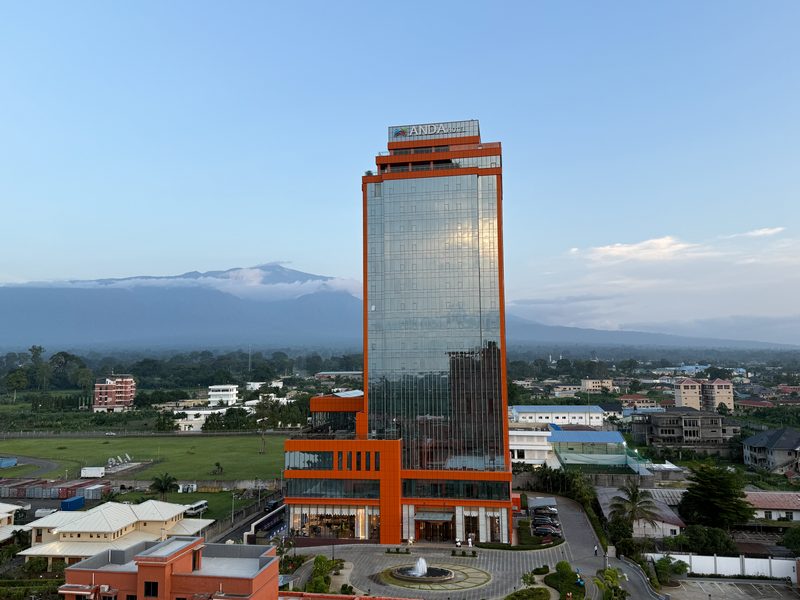
Where to Stay in Malabo in March
Hand-picked hotels across price tiers for March travellers.
Public Holidays in March
Dates that affect opening hours, transport and crowds
Good Friday
Observed nationwide as a public holiday.
Packing Checklist
Bookmark this page — your progress is saved between visits
Need the full list with shopping links?
Climate-specific gear, brand recommendations, and what to leave at home.
View Malabo Packing List →Essential Tips
Insider knowledge and common pitfalls to avoid
Insider Knowledge
Malabo runs on generator time as much as clock time. Power cuts still happen with little warning. The places worth staying at or eating in have their own backup generators. You can usually hear them humming behind the building. If your room goes quiet and lights flicker, that's normal. The city adapts around it. That patience takes adjusting to if you're used to reliable grids.
Spanish is your essential tool here. Functional Spanish opens doors that English simply will not. Bubi and Fang fill homes and neighborhoods. Spanish dominates commerce, government, and daily life across Malabo. Limited Spanish still goes further than polished English. A few phrases make a noticeable difference. Outside international hotels and the Sipopo conference complex, English draws blank looks.
Drink topé, the local palm wine, the morning it's tapped. Then it's milky, mildly sweet, and barely alcoholic. By afternoon it ferments into something sharper and more potent. That catches newcomers off guard. Sellers at the Mercado Central and along the road to Luba carry it in recycled plastic bottles. Fresh morning topé with grilled plantain is one of Malabo's most honest local experiences. Day-old topé is a headache you didn't sign up for.
The best-connected locals eat at comedores. These are small family-run lunch spots serving one or two dishes daily. They lack noticeable signage. Find them in residential streets behind the Mercado Central and along the road toward the airport. The food is home-cooked. Portions are generous. The pepper soup builds warmth slowly rather than burning. Ask hotel staff which comedores they eat at themselves. Not which ones they recommend to guests. The answers differ.
Avoid These Mistakes
Never arrive without a visa arranged well in advance. Equatorial Guinea's visa process is notoriously slow and unpredictable. Showing up at Malabo's airport expecting visa on arrival is a gamble. It frequently ends in a return flight on the next connection out. Start applications six to eight weeks before travel. Carry printed confirmation of every submitted document. Confirm directly with the nearest embassy before booking flights.
Do not underestimate the physical toll of 82% humidity at 31°C (88°F). Travelers used to dry heat or air conditioning find that even short walks through Malabo's midday streets drain energy twice as fast as expected. Schedule anything strenuous before 10 AM or after 4 PM. Market visits, cathedral walks, highland hikes. All of them. Drink water constantly. Even when you don't feel thirsty yet.
Never skip malaria prophylaxis because the trip feels short. Bioko Island has one of Central Africa's higher malaria transmission rates. Mosquitoes make no exceptions for brief visits. Start prescribed prophylaxis before arrival per your doctor's timeline. Sleep under treated nets even with functioning air conditioning. Take the dusk mosquito hour seriously. Wear long sleeves. Apply repellent to all exposed skin. Avoid standing water where they breed.
Ready to plan your trip to Malabo?
Now that you've got the research covered, here's where to go next.
Book Experiences in Malabo
Top-rated things to do in Malabo this March
