Things to Do in Malabo in October
October weather, activities, events & insider tips
Low Season · Budget Friendly
October Weather in Malabo
Long-run averages for October
83°F (28°C)
High Temp
73°F (22°C)
Low Temp
10.0 inches (254 mm)
Rainfall
86%
Humidity
13
Sunny-Day UV
⚠ October is tied for the wettest month of the year in Malabo. Heavy downpours can flood low-lying streets and make unpaved roads impassable within hours. Avoid scheduling critical transfers or departures on tight timelines. Build flexibility into every plan.
⚠ Malaria transmission rises across Bioko Island during the wet season. Prophylaxis is essential, not optional. Start before arrival per your prescribing doctor's schedule. Do not skip doses. The risk is real.
⚠ 28°C (83°F) heat plus 86% humidity produces a heat index that feels significantly hotter than the air temperature alone. Limit strenuous outdoor activity to early morning. Stay hydrated aggressively. Recognize the early signs of heat exhaustion. Your body will thank you.
Is October Right for You?
Weigh the advantages and considerations before booking
Advantages
- + Independence Day on October 12 fills Malabo with parades, live music along the waterfront, and a genuine civic energy you will not see in any other month, with celebrations centered on the Plaza de la Independencia and spilling down the streets toward the port
- + Bioko Island's wet season turns the highlands above Moka into some of the densest, most alive tropical forest in West Africa, and October is prime time for spotting endemic primates like the Bioko drill and Preuss's monkey in the Gran Caldera de Luba reserve, when fruiting trees draw them closer to trails
- + Malabo already receives very few international visitors, and October's reputation as the wettest stretch thins that number further, which means the beaches near Sipopo, the Catedral de Santa Isabel, and the highland trails feel essentially private
- + Marine turtle nesting season is underway on the volcanic black-sand beaches of Bioko's southern coast near Ureka, and conservation groups run accompanied night walks to observe leatherback and green turtles hauling themselves ashore to lay eggs, an experience available only during the wet months
Considerations
- − October ties with June for the heaviest rainfall of the year at 254 mm (10.0 inches), and when it rains in Malabo it does not drizzle: downpours arrive fast and hard, often turning the red laterite roads outside the paved center into ankle-deep mud that stains everything it touches
- − Humidity sits at 86% and rarely drops, which means the 28°C (83°F) afternoon air feels considerably heavier than the number suggests, clothes take a full day to dry on a line, and camera lenses fog the moment you step from an air-conditioned room into the street
- − Malaria risk is elevated during the wet season across all of Bioko Island, including central Malabo, and prophylaxis is not optional: consult a travel medicine clinic well before departure and bring DEET-based repellent rated at 30% or higher
Best Activities in October
Top things to do during your visit
Bioko Highland Primate Treks from Moka
The cloud forest above Moka, roughly 30 km (19 miles) southwest of Malabo, is one of the last places on earth to see Bioko drills in the wild, and October's fruiting season draws them downslope where trained local guides can spot them. The wet season makes the trails slippery and the leeches enthusiastic. But it also means the canopy drips, the air smells of rotting figs and wet bark, and the forest sounds different from dry months: louder, with more calls, more movement. Treks typically leave at dawn to catch primates feeding in the first light, returning by early afternoon before the heaviest rain. You will need proper hiking boots with ankle support, not trail runners, and be prepared for 4 to 6 hours of walking on uneven terrain at elevations around 1,200 m (3,940 ft).
Booking Tip: Arrange through conservation-affiliated operators at least three weeks ahead, as permits for the Caldera reserve are limited and processed through the national parks authority. Groups are kept small, usually four to six people, which means slots fill quickly when a research team is also in the field.
Pico Basilé Summit Expeditions
Pico Basilé rises to 3,012 m (9,882 ft) directly behind Malabo, and on the rare clear morning in October you can see the volcanic cone of Mount Cameroon across the water from the summit. The hike itself follows a rough vehicle track through successive climate bands: lowland cacao plantations give way to montane forest thick with tree ferns, then to a scrubby alpine zone where the temperature can drop to 10°C (50°F) even in the tropics. October's cloud cover means summit views are hit or miss. But the forest sections are arguably better in the wet: orchids are blooming, the moss is electric green, and the air at 2,000 m (6,560 ft) finally feels cool after days of coastal humidity. Most guided ascents take two days with a camp at roughly 2,400 m (7,870 ft), though strong hikers with a predawn start can do a punishing single-day push.
Booking Tip: Book at least two weeks ahead and confirm that your operator provides a four-wheel-drive vehicle for the lower portion of the track, which becomes nearly impassable in October mud.
Turtle Nesting Night Walks at Ureka
Ureka, at the southern tip of Bioko Island roughly 70 km (43 miles) from Malabo by a road that takes the better part of a day in wet conditions, is one of the most important leatherback turtle nesting sites in the Gulf of Guinea. October falls squarely in nesting season, and conservation teams run small-group night walks along the black volcanic sand beaches where turtles weighing up to 700 kg (1,540 lb) drag themselves ashore after dark. The experience is raw: no boardwalks, no lighting beyond red-filtered headlamps, and the sound of the surf mixing with the heavy, rhythmic breathing of a nesting turtle is something that stays with you. You will likely need to overnight in basic field-station accommodation near the beach, and the drive down from Malabo through the southern highlands is an adventure in itself, with river crossings that swell unpredictably in the rain.
Booking Tip: Coordinate with wildlife conservation programs operating on Bioko's southern coast, as independent access to Ureka's nesting beaches is restricted. Plan for a minimum two-night trip from Malabo and arrange transport through operators experienced with the southern road in wet season.
Colonial Malabo Walking Circuit
Malabo's old Spanish quarter rewards a full morning, though you could rush it in two hours. Start at the Catedral de Santa Isabel. Its twin neo-Gothic spires have anchored the waterfront since 1916. Services still run in Spanish each Sunday. Streets toward the port pass faded colonial townhouses with wrought-iron balconies and wooden shutters swollen from decades of equatorial humidity. Pastel paint peels in long curls. The central market nearby assaults the senses: pyramids of malanga root and green plantain, buckets of palm oil the color of burnt orange, whole smoked fish stacked like cordwood. A corrugated roof amplifies October's rain into a roar. The walk ends at the port. Salt and diesel mix with char smoke from women grilling fresh-caught grouper on improvised braziers. Arrive before 10 AM. The air stays relatively cool then. The market hits peak bustle.
Booking Tip: Licensed local guides speaking Spanish and some English can be arranged through your accommodation with a day or two of notice. The walking circuit covers roughly 3 km (1.9 miles) on flat ground. Sidewalks are uneven and puddle badly after rain. Wear shoes with grip. Skip sandals.
Sipopo Beach and Coastal Kayaking
The Sipopo complex, built east of Malabo for the 2012 Africa Cup of Nations, sits on coast where volcanic sand darkens from grey to black beyond the manicured areas. Between October's downpours, morning windows bring calm. The water in sheltered coves turns warm, flat, and clear enough to see the bottom at 3 m (10 ft). Kayaking here reveals Malabo from the water. The view puts the city's odd contrasts in perspective: cathedral spires, oil-company compounds, unfinished concrete shells of optimistic construction projects, all visible from one paddle stroke. The volcanic rock formations along the shoreline reward close exploration. Tidal pools pock the rocks, holding small crabs and anemones. Watch the afternoon. Conditions shift from glass-calm to whitecapped swells in the time it takes to paddle 500 m (1,640 ft) offshore.
Booking Tip: Equipment rental is limited in Malabo. Confirm kayak availability several days ahead. Morning departures before 9 AM give you the best weather window and the flattest water.
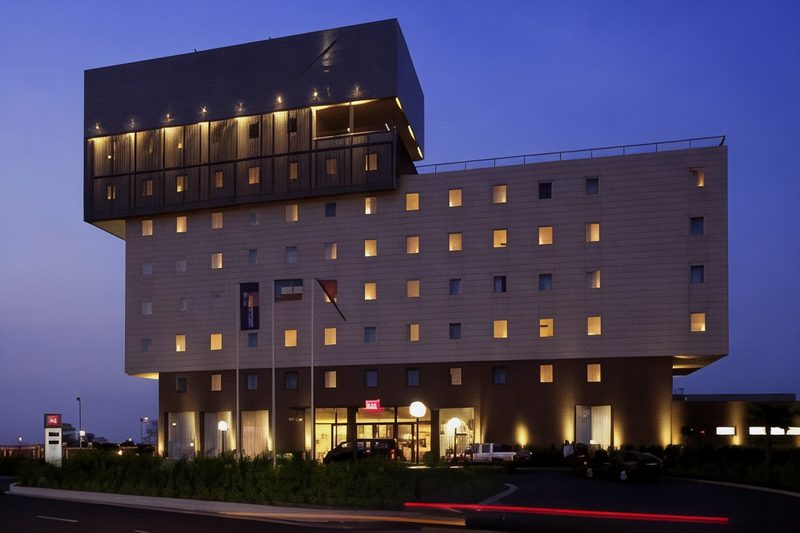
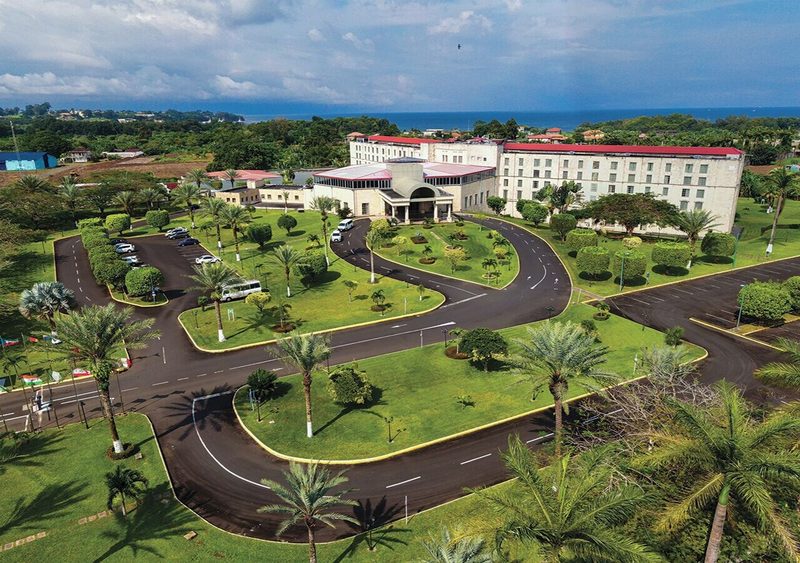
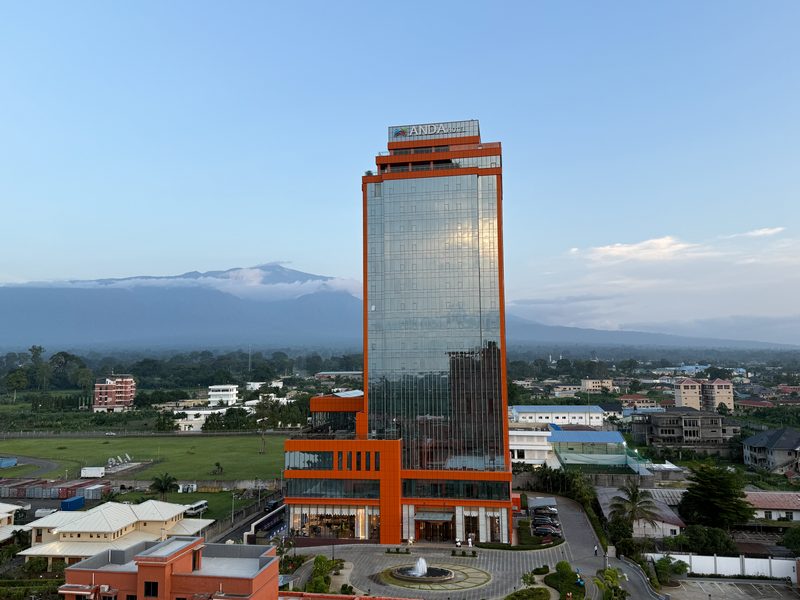
Where to Stay in Malabo in October
Hand-picked hotels across price tiers for October travellers.
Public Holidays in October
Dates that affect opening hours, transport and crowds
Independence Day
Observed nationwide as a public holiday.
Independence Day
Observed nationwide as a public holiday.
Independence Day
Observed nationwide as a public holiday.
Packing Checklist
Bookmark this page — your progress is saved between visits
Need the full list with shopping links?
Climate-specific gear, brand recommendations, and what to leave at home.
View Malabo Packing List →Essential Tips
Insider knowledge and common pitfalls to avoid
Insider Knowledge
The morning hours between 6 AM and 9 AM are your golden window in October. The rain has usually cleared overnight. The humidity has not yet peaked. The light along Malabo's waterfront carries a soft, grey-gold quality that disappears once the clouds thicken. Plan your outdoor activities for this window. Schedule indoor or covered activities for the afternoon.
Malabo's central market peaks on Saturday mornings. Highland village vendors descend to the coast then. The selection of smoked fish, forest snails, and fresh-cut cacao pods dwarfs weekday offerings. Noise levels rise. Conversation flows easier. Arrive before 8 AM for the fullest stalls.
Photography in Malabo demands real caution. Avoid photographing government buildings, military installations, the port, or the airport. This is not mere politeness. Your camera can be confiscated. Security personnel will detain you. Stick to markets, the cathedral, and natural scenery. Ask permission before photographing individuals.
October rains wreck the road to Luba and southern Bioko Island. Maps promise three hours. Reality delivers five or six. River crossings become impassable after heavy overnight rain. Planning any trip south of Malabo? Build in an extra day of buffer. Confirm road conditions with your driver the morning of departure.
Avoid These Mistakes
Forget visa on arrival. Equatorial Guinea requires advance visa arrangements. The process is bureaucratic and slow. Arrive without proper documentation and you will board the next flight out. Start the visa process at least six to eight weeks before your travel date.
October showers are not brief tropical sprinkles. Malabo's October rains are heavy, sustained, and capable of flooding streets within minutes. A serious rain jacket is essential. Waterproof protection for your belongings is mandatory. These are not precautions. They are requirements.
Never leave all your cash in one place. Never rely on credit cards. Card acceptance in Malabo is extremely limited outside a handful of hotels catering to oil-industry workers. ATMs are unreliable. The CFA franc is a cash economy. Carry enough cash for your entire stay. Split it across multiple secure locations on your person and in your luggage.
Ready to plan your trip to Malabo?
Now that you've got the research covered, here's where to go next.
Book Experiences in Malabo
Top-rated things to do in Malabo this October
